


With growing business needs and customer expectations, Traditional Content Management architecture became more like an anchor than a foundation.
Everyone started to switch to a Headless CMS or Headless Content Management System for more scalability, faster load time, and enhanced security.
Because using the wrong CMS can wreak havoc on their business.
In this article, we will touch upon the differences between Traditional and Headless CMS and the benefits of headless CMS. Let’s get right into it.
What is a Headless CMS and how does it work?
A headless CMS is a type of content management system that separates the way content is created and stored from the way it is presented to users across different platforms and devices.
In simple words, a headless CMS is kind of like having a body without a head. Sounds crazy, right?
Essentially, it separates where your website's content lives (the "body") from how that content looks on different screens and devices (the "head").
In the past, content and presentation were stuck together. Any little tweak to the content would mean changes across the board - website, mobile app, you name it.
That was a massive headache.
But with a headless CMS, your content becomes free and flexible.
Here's how it works: All your content gets stored safely in a central repository.
Then, developers can access that content through APIs and present it awesomely anywhere they want - websites, watches, VR experiences, whatever!
The front-end code can use any modern technology like React or Vue without being bogged down by the back-end CMS.
This separation brings some serious advantages:
- Content Flexibility - Reuse that content across any channel without restraints.
- Front-end Freedom - Devs can build optimized user experiences for every device.
- Streamlined Workflows - Writers focus just on great content modeling and devs control presentation.
- Future-Proof - As new platforms emerge, your content seamlessly adapts without rebuilding.
The key difference: Headless vs Traditional CMS
To truly understand a headless CMS, we must first look at how a traditional CMS operates. A traditional system combines the content storehouse, editing interface, and presentation layer into one monolithic package.
Think of it as a tightly coupled, all-in-one solution.
This coupled architecture means your content lives intertwined with how it gets displayed. Any change to the back-end content directly impacts the hardwired front-end presentation, like a website.
The traditional model follows this one-to-one publishing approach - your content experience is designed solely around pushing updates to a single front-end. This image illustrates that basic architecture well, with the database, admin interface, and view layer all interconnected.
This coupled design brings some inherent limitations around flexibility, device compatibility, and iteration cycles. The publishing process starts and stops as you rebuild the entire solution for each new channel.
In recent years, we've seen an emergence of "headless" or "API-first" CMSs aiming for more content flexibility. While often marketed under new terms like "Content Hubs," they still operate with that core separation of concerns.
The headless approach decouples the back-end content repository from the front-end presentation layer. Your structured content lives in a tailored content management hub, separate from any predefined "head" or display.
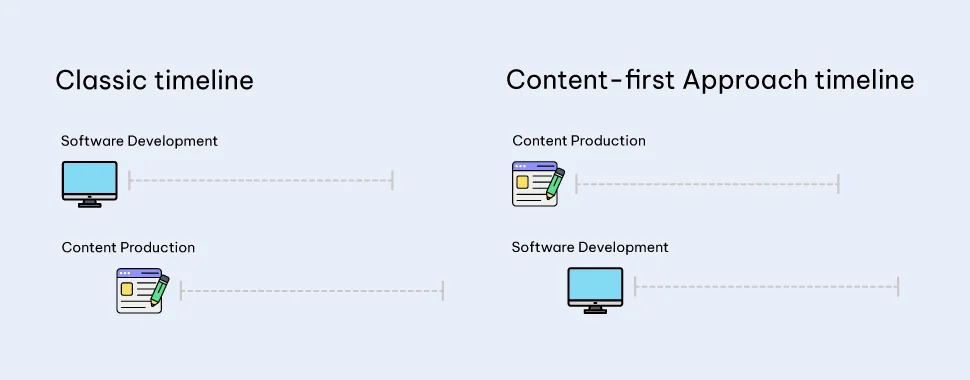
This separation unlocks a one-to-many distribution model. Through APIs, that same back-end content can now deploy across unlimited front-end experiences - websites, mobile apps, smartwatches, you name it.
Compared to traditional monolithic CMSs, headless brings some key advantages:
Modern Tech Stacks - Front-end teams use any framework for fast, device-optimized UIs
Structured Content Modeling - Writers create portable, API-friendly content objects
Modular Architecture - Update back-end without rebuilding already-published front-ends
Continuous Deployment - Launch new content and experiences simultaneously across channels
While a traditional CMS provides a monolithic, hard-coupled system, a headless CMS acts as a flexible, API-driven content hub. This separation empowers organizations to embrace true omnichannel experiences built on modern development practices
Here is a section on the pros of using a headless CMS, written in simple language without jargon or weasel words, driving home the key benefits:
What are the advantages of going headless?
Embracing a headless CMS opens up several powerful advantages for organizations looking to deliver enhanced content experiences across multiple touchpoints.
By decoupling content management from presentation, you open up new levels of flexibility, scalability, and speed. Here are some of the biggest advantages of Headless CMS:
1. Flexible Front-End Development
With a headless architecture, your front-end developers aren't locked into a rigid system. They have the freedom to use the latest tools and frameworks they're most comfortable with.
Want to build a mobile app with React Native? Easy. Need a blazing-fast website using Gatsby? No problem. Headless separates front-end code from back-end, so teams can use the best technologies for each job.
2. Consistent Omnichannel Experiences
Rather than locking your content to one website, headless makes it seamlessly reusable across multiple channels - websites, mobile apps, smartwatches, in-car displays, and more.
A headless CMS makes your core content seamlessly reusable everywhere. You can design optimized front-end experiences for each platform while pulling from the same centralized content hub behind the scenes.
3. Tailored Content Modeling
Writers and editors get tailored, structured interfaces for managing content as portable data objects rather than rigid web pages or templates. This models your content in a portable, future-proof way as new digital channels continue emerging over time.
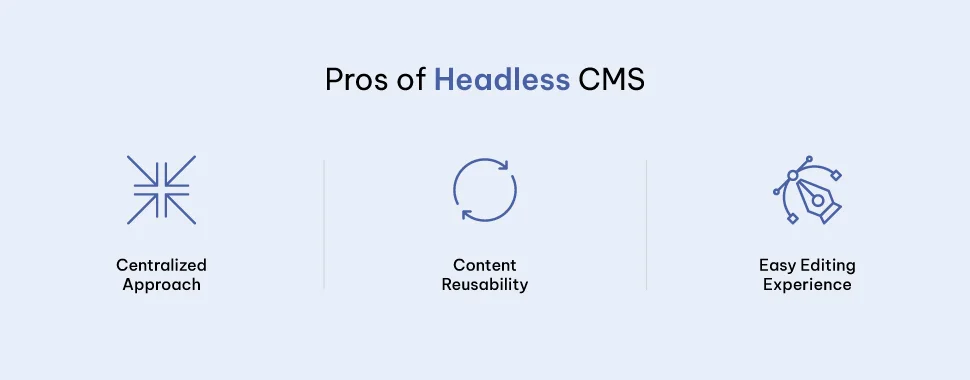
4. Modular, Scalable Architecture
The decoupled, API-driven approach enables a modular, best-of-breed tech stack. You can seamlessly add, swap, or upgrade individual components as needed without full rebuilds. This makes it much easier to scale your content operations across teams and channels.
5. Enhanced Security Posture
With your presentation layers fully separated from the core content repository, potential security risks are reduced. If one customer-facing front end somehow gets compromised, the others can remain securely insulated and operational.
Overall, going headless unlatches content agility, elevated digital experiences, and faster development cycles. Your omnichannel content management becomes streamlined, efficient, and built to endure as customer touchpoints keep evolving.
The downside of using headless CMS:
While headless CMS offers many compelling advantages, there are some potential drawbacks to be aware of before making the shift:
1. Increased Developer Involvement
Since a headless CMS lacks a built-in presentation layer, developers must create and maintain all the front-end experiences that consume the content APIs. This requires more initial setup work compared to traditional CMSs with coupled front-ends. Having in-house developers or an agency partner is generally a necessity.
2. Less Marketer-Friendly Editing
The decoupled architecture means content editors don't get a true "what-you-see-is-what-you-get" preview during the editing process like with traditional CMS. There's no real-time rendering of how content will look on different websites or apps. This can make the editing experience less intuitive for non-technical teams used to in-line preview capabilities.
3. Steeper Learning Curve
Adopting a new headless architecture often involves learning new content modeling concepts and API-driven methodologies. Your team must understand structured content object modeling and API interaction logistics, rather than just building basic web pages. There can be a ramp-up period compared to traditional web-centric editing.
4. Potentially Higher Upfront Costs
While cost variables depend on your specific requirements, headless CMSs tend to have higher upfront implementation fees compared to traditional options. You're investing in more complex infrastructure with multiple technology components like CDNs or hosting for various front-end environments. Consulting and training could also add upfront expenses.
5. More Integrations to Manage
You've got to find hosting for all those decoupled front-end experiences, integrate a CDN for fast content delivery, implement any additional tools or services you need, and so on. Soon, you'll be managing multiple platforms and vendors.
Traditional all-in-one CMSs, on the other hand, handle all those different components under one roof. Less piecemeal integration overhead to deal with.
So before going headless, take a hard look at your team's technical skills, budgets, and top priorities. For some companies, the increased flexibility of a headless architecture is worth the potential hassles of more integration work. The modular approach lets you handpick best-fit solutions.
Headless CMS Options to Try
WordPress + Gatsby / Next / React:
This powerful combination takes the world's most popular content management system, WordPress, and headless wordpress pairs it with modern front-end frameworks like Gatsby, Next.js, or React.
By decoupling the back-end (WordPress) from the front-end (Gatsby, Next.js, or React), developers gain flexibility and performance advantages.
With WordPress handling the content management and the front-end framework driving the presentation layer, you get the best of both worlds – the user-friendly WordPress admin interface coupled with the speed, scalability, and rich interactive experiences that these cutting-edge JavaScript frameworks offer.
Drupal + Next JS:
Headless Drupal has been a reliable choice as headless CMS for complex needs. Its features for organizing and controlling content makes it a powerful tool. However, when you pair with Next.js, a modern front-end framework, you can take Drupal's capacity to new heights.
Here, Drupal acts as the central content hub, handling tasks like structuring content, defining user permissions, and managing editorial workflows. And Next.js takes over the presentation layer, using React to build the user-facing interfaces.
This separation allows developers to create highly interactive and responsive user experiences without being limited by Drupal's front-end constraints.
Next.js brings techniques like server-side rendering, static site generation, and code-splitting, resulting in blazing-fast load times and seamless interactions.
Shopify Hydrogen:
For ecommerce, Shopify Hydrogen helps developers craft bespoke online stores without the constraints of pre-built templates.
As a React-based framework, it offers a library of ready-to-use components that serve as building blocks for crafting the entire shopping experience from the ground up.
Unlike traditional Shopify themes, Hydrogen seamlessly integrates your custom storefront with the Shopify platform via webhooks.
This approach grants you access to Shopify's robust e-commerce features while maintaining complete control over the user experience, allowing you to unleash your creativity and tailor every aspect to your brand's unique identity.
Ready to Experience a Headless CMS First-Hand?
Making the choice comes down to looking at what you really need and where you see yourself in the future. If a simple, straightforward website is all you're after, and you're not planning to expand much beyond that, the traditional route might be your best bet.
After learning about the pros and cons of using a headless content management system, you might be eager to kick the tires yourself on an upcoming project.
Whether you need to streamline content operations or want to push the company toward an omnichannel digital strategy, preparing that first headless CMS implementation can be an exciting milestone.
If you're ready to dip your toes into the headless waters, working with an experienced web development agency can be a lightweight yet powerful onramp.
Spin up your first headless project, then experience first-hand how liberated your content can become when decoupled from restrictive presentation models.